Chronobiology Supplements: When to Take What


Most people take supplements the same way they take aspirin — whenever they remember, with whatever's nearby, hoping for the best. If you're doing this with melatonin, magnesium, or vitamin D, you're not leaving results on the table. You're actively working against your own biology.
Here's what changes how you think about this: your cells don't need certain molecules. They need those molecules at specific times. Every major organ runs on a molecular clock — a feedback loop of proteins called CLOCK and BMAL1 that cycles roughly every 24 hours. Your liver metabolizes compounds differently at 8am than at 8pm. Your gut absorbs certain fats more efficiently in the afternoon. Your brain clears waste products during a narrow overnight window. Chronobiology supplements aren't a new product category — they're the same supplements you already know, taken with an understanding of when your body is actually ready to use them. That timing difference can be the gap between a supplement that does nothing and one that genuinely shifts how you feel.
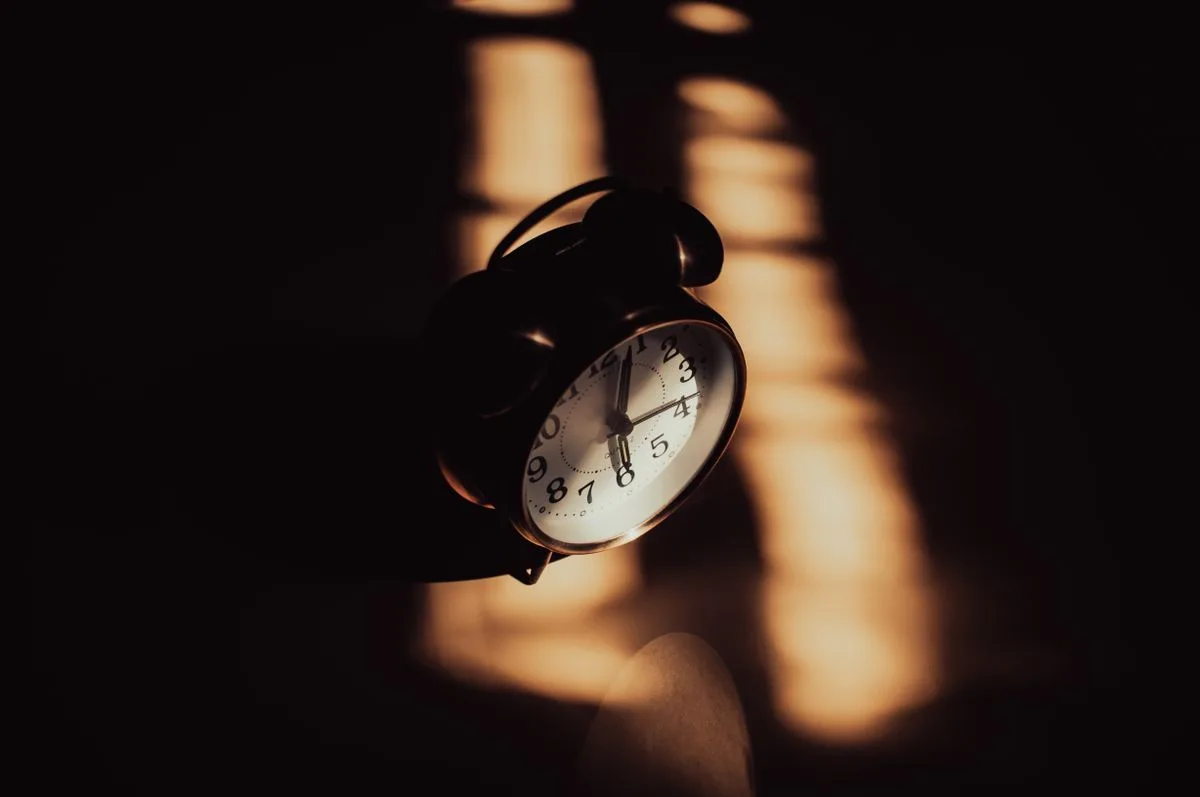
Context. A supplement becomes chronobiological when its mechanism of action aligns — or conflicts — with your body's internal circadian clock.
Take vitamin D3. Most people treat it like a nutrient top-up, something to offset gray winters. But vitamin D3 is technically a hormone precursor, and its downstream effects include modulating the expression of clock genes themselves. A 2014 study in the Journal of Biological Rhythms by Shiber et al. found that vitamin D receptor (VDR) activation influences core clock gene expression in multiple tissues. Taking D3 at night, when your body is winding down and cortisol is low, doesn't miss an absorption window — it interferes with the signals that tell your cells what time it is.
The same logic applies to adaptogens. Ashwagandha (Withania somnifera) is popular for stress, but what it actually does is modulate the HPA axis — the cortisol production system. Cortisol follows a tight circadian rhythm: it peaks 30–45 minutes after you wake up (the cortisol awakening response, or CAR) and gradually declines across the day, reaching its lowest point around midnight. Taking ashwagandha in the morning, when cortisol is naturally and appropriately high, blunts a response your body is supposed to have. Take it in the evening — when cortisol should be falling — and you're pushing in the same direction as your biology.
This is the core principle of circadian nutrition applied to supplementation: the question isn't what you take, but when your biology is listening. Every chronobiology supplement discussion should start here.

Melatonin is the most misused supplement in the circadian category, and the problem starts with dose. Walk into any pharmacy and you'll find 5mg, 10mg, even 20mg melatonin gummies sold as standard sleep aids. The physiological peak of endogenous melatonin — what your own pineal gland produces at night — sits somewhere between 0.1mg and 0.3mg. You are, in many cases, dosing 50 to 100 times above your body's natural output.
The result isn't better sleep. A 2014 meta-analysis in PLOS ONE by Ferracioli-Oda et al. found that doses between 0.1mg and 0.5mg were as effective as higher doses for sleep onset — and produced significantly less morning grogginess and receptor desensitization. High-dose melatonin creates a pharmacological effect rather than a chronobiological one. You're sedating your brain, not signaling your clock. Timing matters as much as dose. Melatonin begins rising naturally about two hours before your habitual sleep time — a process called dim-light melatonin onset, or DLMO. Take even a low-dose supplement too early (say, 6pm for a midnight sleeper) and you shift your circadian phase in ways that can leave you feeling off-kilter the next day. The research-supported window for melatonin timing is 30–90 minutes before your target sleep time, at 0.3–0.5mg.
For shift workers or people managing jet lag, the timing math changes. A study in Sleep Medicine Reviews (Arendt & Skene, 2005) established melatonin as an effective chronobiotic — capable of actually shifting circadian phase — when timed correctly relative to destination time zones. That requires precision, not taking it somewhere over the Atlantic.

Magnesium glycinate has become one of the better-supported evening supplements, and its mechanism is straightforward: magnesium activates GABA receptors, the primary inhibitory system in your brain that needs to dominate for you to fall and stay asleep. Glycine, the amino acid it's chelated with, independently lowers core body temperature — a necessary step in sleep initiation.
A 2012 randomized controlled trial in the Journal of Research in Medical Sciences (Abbasi et al.) found that magnesium supplementation in older adults significantly improved sleep efficiency, sleep time, and early morning awakening — alongside reducing inflammatory markers like CRP and IL-6. Those inflammatory markers follow circadian patterns themselves, tending to rise in the early morning hours, which partially explains why poor sleepers wake up feeling worse.
The practical timing for magnesium sleep supplementation: 200–400mg of magnesium glycinate taken 30–60 minutes before bed. Not magnesium oxide (poor bioavailability) and not magnesium citrate (laxative effect at higher doses). The glycinate form crosses the blood-brain barrier more efficiently, and the glycine component contributes independently to sleep quality. Ashwagandha slots in here as one of the more researched adaptogens for circadian rhythm support. A randomized, double-blind study published in Medicine (Langade et al., 2019) found that 300mg of ashwagandha root extract taken twice daily significantly improved sleep quality and anxiety scores versus placebo. Taking one of those doses in the evening specifically targets the cortisol decline window, supporting the natural winding-down process.
The evening principle: support what's already trying to happen. Your body wants cortisol low, core temperature dropping, and melatonin rising. Your evening chronobiology supplement stack should help, not fight it.

Morning supplementation is about capitalizing on biological activation that's already occurring. Cortisol isn't a villain — it's a mobilizing hormone that primes alertness, immune readiness, and glucose metabolism. The cortisol awakening response represents a 50–100% spike within the first hour of waking, and it's one of the strongest natural performance windows in your day.
Vitamin D3 belongs squarely in the morning chronobiology supplement stack. Mechanistically, morning sunlight triggers both vitamin D synthesis (in outdoor light) and circadian entrainment via retinal photoreceptors. Even when supplementing rather than sunbathing, taking D3 in the morning mirrors the biological timing of its natural source. A 2023 review in Nutrients noted that the timing of vitamin D supplementation relative to meals and light exposure significantly modulates its downstream hormonal effects — and morning administration consistently outperformed evening in studies measuring 25(OH)D conversion efficiency.
Pair D3 with K2 (MK-7 form) to direct calcium properly, and take it with a fat-containing meal. D3 is fat-soluble — absorption without dietary fat drops markedly.
Omega-3 fatty acids (EPA and DHA) are another fat-soluble compound best taken with the largest meal of the day, which for most people falls at lunch or dinner. A 2021 study in FASEB Journal found that EPA and DHA incorporation into cell membranes was higher when omega-3s were taken in the morning versus the evening in participants with high triglycerides, suggesting metabolic context matters for circadian nutrition. For general populations, midday with lunch works well.
Chronotype — your innate biological tendency toward morning or evening preference — shifts the ideal timing of all circadian supplements by 60–90 minutes. A strong "lion" (morning type) naturally awake by 6am has a DLMO around 8:30–9:30pm. An "owl" sleeping at 1am has a DLMO around 11pm–midnight. The same 9pm melatonin dose is appropriate for one and actively phase-shifting for the other. Here's a practical framework for timing your chronobiology supplements based on chronotype:
Morning type (lion), target sleep 10pm–6am:
Evening type (wolf/owl), target sleep 1am–9am:
The common mistakes this framework prevents: taking vitamin D at night (disrupts clock gene expression), megadosing melatonin (receptor downregulation, morning grogginess), taking ashwagandha in the morning (blunts the CAR), and taking fat-soluble supplements without food.
One more thing worth naming: treating chronobiology supplements as a substitute for the foundational circadian behaviors — consistent wake times, morning light exposure, eating within a defined window. Supplements work at the margin. They don't rescue a clock that's completely unanchored.
None of this requires a radical overhaul. You don't need new supplements — you almost certainly already own vitamin D, magnesium, and possibly melatonin. What changes is the operating logic: from "take this when you remember" to "take this when your biology is positioned to use it."
The research on circadian pharmacology — how timing affects drug and supplement efficacy — has been accelerating since the early 2000s, and the consistent finding is that timing effects are often as large as dose effects. For some compounds in the chronobiology supplements space, timing is the mechanism.
Start with one change: move your vitamin D to morning, or shift your melatonin dose to 0.3mg 60 minutes before bed. See what changes in how you wake up. That's enough to begin understanding your circadian rhythm and how your supplement stack interacts with it.
To go deeper into your own chronotype and build a personalized circadian supplement timing protocol, the RYTM app gives you a daily schedule built around your specific biology — not a generic wellness template.
You don’t have to take my word for it — check it in practice. Get my author’s checklist “5 non-obvious signs that your biorhythms are off” and start the path to recovery today.
Get a checklist and make an appointment