Circadian Health at Work: Sync Your Schedule to Your Biology


Most offices are accidentally waging a biological war on their employees — and everyone's losing.
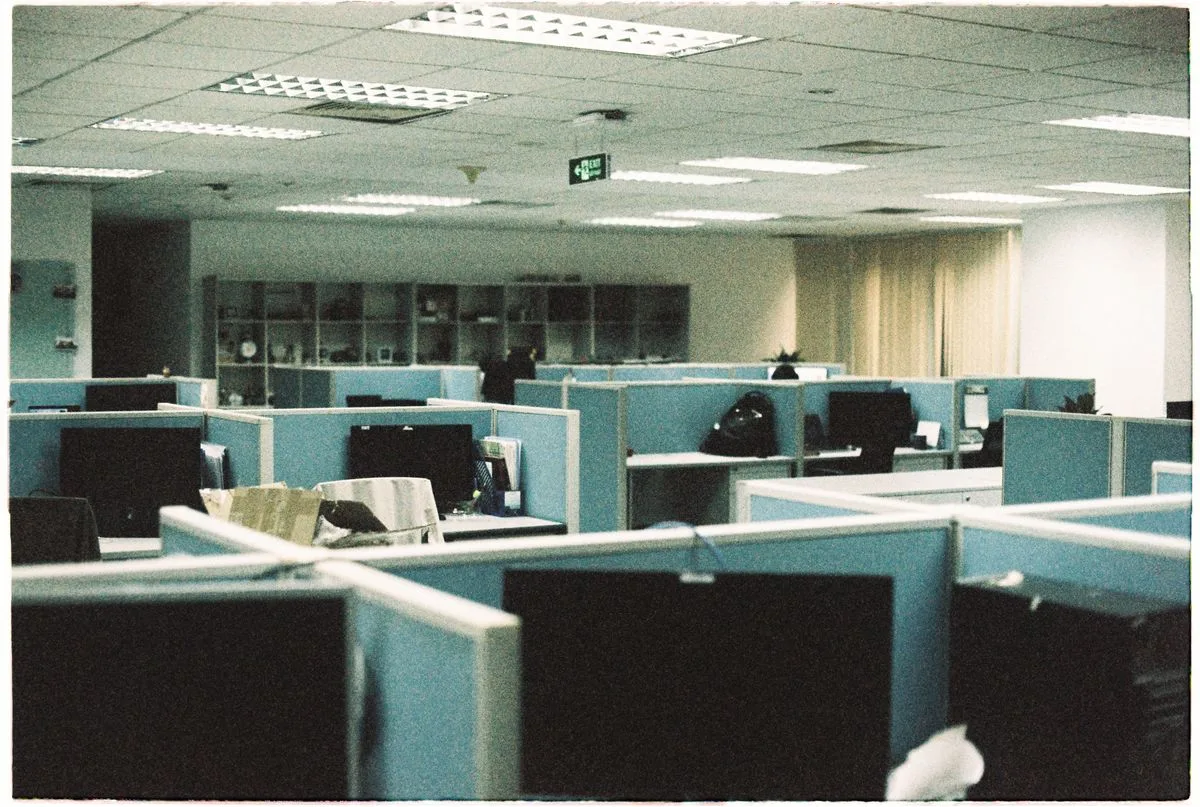
The fluorescent lights that flicker on at 8 a.m. send your brain a confusing signal: it's high noon. The sealed windows cut off the natural light cues your circadian clock has relied on for 200,000 years of human evolution. The 3 p.m. all-hands meeting lands right when your core body temperature dips and cognitive speed slows. Then you commute home staring at a phone screen, and wonder why you can't fall asleep until midnight.
None of this is personal weakness. It's misalignment. Your biology is running a 24-hour program — light cues, temperature shifts, cortisol pulses, melatonin builds — and the modern workplace was designed without reading the manual. A 2019 study in Current Biology found that workers with poor circadian alignment had 23% lower productivity scores, 33% more sick days, and nearly double the rate of burnout compared to those whose work schedules matched their chronotype.
The good news: you don't need a new job. You need a few targeted changes.
The circadian clock isn't a metaphor. It's a physical mechanism — a cluster of roughly 20,000 neurons in the suprachiasmatic nucleus (SCN) of the hypothalamus — and it governs nearly every system in your body. Heart rate, immune response, digestion, hormone secretion, even DNA repair: all of it runs on a 24-hour schedule timed primarily by light.
The problem is that the average office worker gets only 200 lux of light exposure during the workday. Standing outside on a cloudy day? That's 10,000 lux. The difference isn't trivial. Under dim artificial light, your SCN doesn't get the signal it needs to anchor your rhythm. Cortisol — which should spike sharply in the first hour after waking to drive alertness — stays sluggish. Melatonin — which should build gradually after dark — starts rising too early in the evening, leaving you groggy at 4 p.m. but wired at 10 p.m.
Then there's the temperature problem. Modern offices are typically kept at a uniform 70–72°F year-round. Your body, however, expects a 2–3°F fluctuation across the day: cooler in the morning (which supports focus), slightly warmer at midday (which drives a brief dip in alertness — the post-lunch slump most people blame on food), and cooling again in the late afternoon as the body primes for deep work. Flat temperature flattens your rhythm.
Add in erratic meal timing, back-to-back video calls that replace movement with sedentary screen time, and evening Slack notifications that re-trigger cortisol when it should be falling — and you have a perfect recipe for circadian disruption.
What follows isn't a lecture about habits. It's a map of where the leverage points are.
Cortisol peaks 30–45 minutes after waking. That window is your single best opportunity for focused cognitive work — strategic thinking, writing, complex problem-solving. Most people spend it answering email in a dim kitchen.
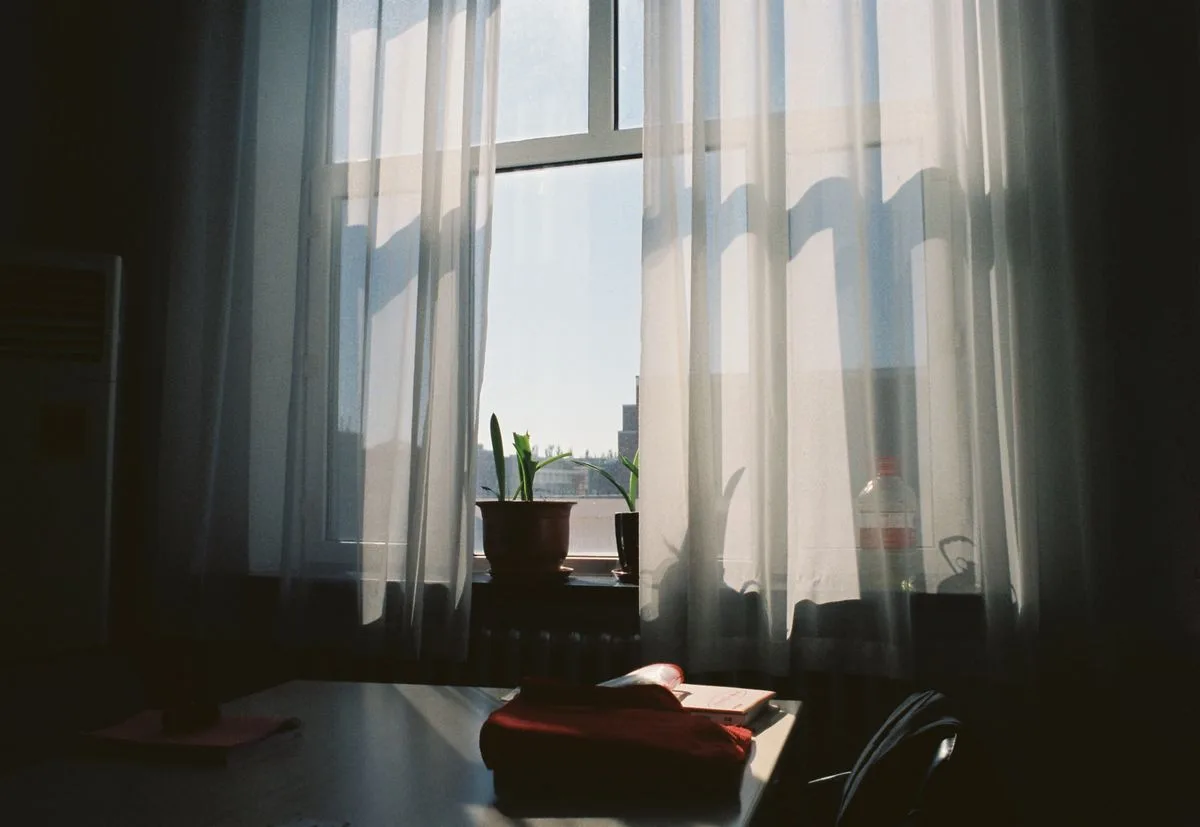
Getting 10 minutes of bright outdoor light within 30 minutes of waking — even on an overcast day — anchors your cortisol curve, sharpens that morning peak, and sets your melatonin offset for the night, which means you'll feel tired at the right time. This isn't a wellness cliché. Stanford neuroscientist Andrew Huberman has published extensively on this mechanism, and the underlying photoreceptor pathway (retinal melanopsin cells projecting to the SCN) is one of the most replicated findings in chronobiology.
For office workers, this translates to one concrete change: get outside before you open your laptop. Walk to a coffee shop. Eat breakfast on a balcony. Sit by a window with direct sun exposure. If you're in the northern hemisphere in winter, a 10,000-lux light therapy lamp on your desk within the first hour of your workday delivers comparable benefit.
The compounding effect is real. In a 2017 study published in the Journal of Clinical Sleep Medicine, office workers seated near windows slept an average of 46 minutes more per night than those in windowless workspaces — with significantly better sleep quality. The light exposure during work hours set their evening melatonin rhythm more precisely.
One morning light habit. That's the lever.
Not all hours are cognitively equal. Your brain runs through a predictable pattern each day — and fighting it is like trying to sprint uphill.
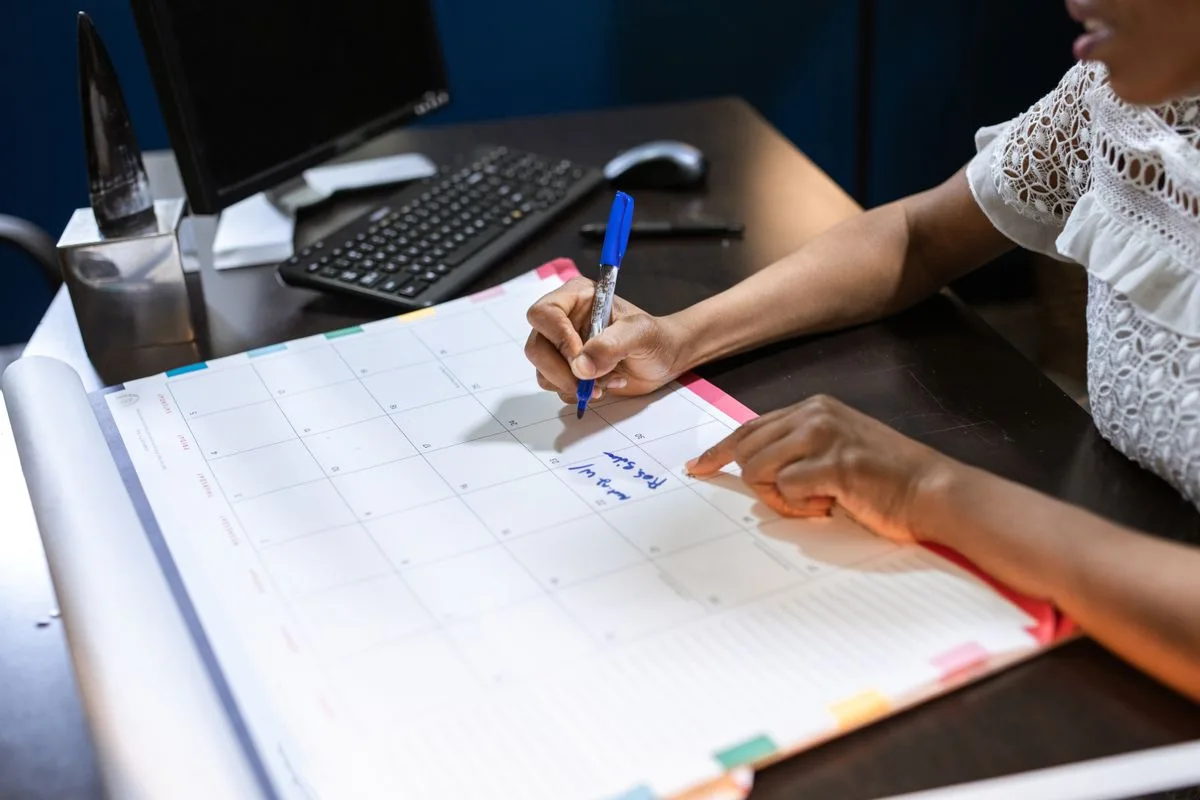
For most people (roughly 60% of the population), peak analytical performance occurs between 9–11 a.m. This is when core body temperature rises fastest, working memory is sharpest, and inhibitory control is strongest. It's the time to do work that requires sustained attention: writing, coding, financial modeling, deep analysis.
From roughly 11 a.m. to 1 p.m., a secondary collaboration window opens. Verbal fluency improves, social processing speeds up, and the mood-linked parts of the prefrontal cortex are highly active. This is your best time for meetings, negotiations, presentations, and brainstorming.
The 1–3 p.m. window is the dip. Core body temperature drops slightly, alertness falls, and reaction times slow. This isn't about lunch — the dip occurs even when people fast. It's a biological midday pause baked into the human chronotype. Fighting through it with caffeine delays the caffeine crash into your sleep window. Working with it — a 10–20 minute nap, a walk, or lower-cognitive tasks like admin and email — restores alertness for the afternoon.
From roughly 3–6 p.m., most people hit their peak physical and perceptual performance window: reaction time is fastest, muscle coordination is best, and a second wave of cognitive stamina arrives. Athletes and researchers have independently verified this pattern. It's also when creative synthesis tends to be strongest — connecting ideas rather than generating them from scratch.
Chronotype shifts this entire schedule by 1–3 hours. If you identify as a definite evening type (evening person or "owl"), your analytical peak may not arrive until 11 a.m.–1 p.m. Working with your chronotype rather than against it is one of the highest-ROI adjustments you can make.
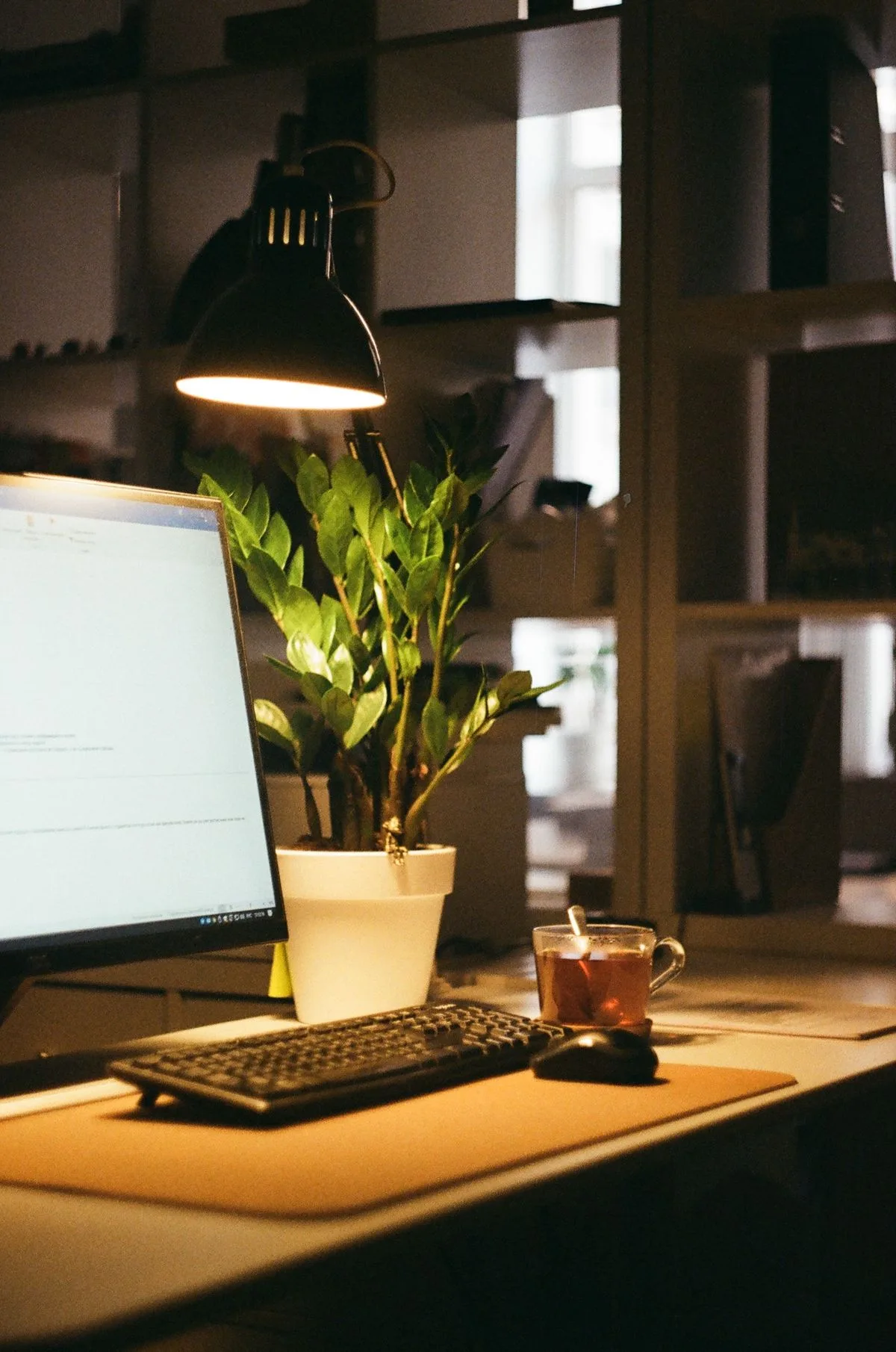
You can't redesign your office. But you can modify your immediate environment in ways that push your circadian health in the right direction.
Light by time of day. In the morning, maximize blue-enriched white light — it's alerting, suppresses lingering melatonin, and sharpens cognitive function. After 6 p.m., swap to warm-toned lights (2700K or lower) or dim the overhead lights significantly. Blue-blocking glasses aren't just a Silicon Valley affectation — a randomized controlled trial published in Chronobiology International found that wearing amber-lens glasses for 2 hours before bed improved sleep quality by 58% and reduced sleep latency by 16 minutes in office workers.
Screen settings. Use Night Shift or f.lux to shift your display to warmer tones after sunset. This is a 30-second setup that pays off every evening.
Temperature micro-nudges. If you have any control over your environment, slightly cooler temperatures in the morning (68–69°F) support alertness. If you work from home, opening a window in the morning achieves this naturally and adds the light cue simultaneously.
Meal timing. Eating within a consistent 8–10 hour window anchors your peripheral circadian clocks — the secondary clock systems in your liver, gut, and metabolic tissue. Irregular meal timing desynchronizes these peripheral clocks from your SCN even when your sleep schedule is consistent. A 2020 study in Cell Metabolism found that restricting eating to a consistent 10-hour window, without changing diet composition, reduced cardiometabolic risk markers and improved sleep quality in shift workers over 12 weeks.
These aren't sweeping lifestyle changes. They're environmental levers. Adjust one. See what shifts.
Individual adjustments help. But circadian health workplace improvements have the most impact when organizations stop treating all hours as equivalent.
Early evidence from a handful of forward-looking companies — and from years of school start time research — shows that shifting meeting-heavy hours toward mid-morning and protecting the early morning for deep individual work reduces cognitive load, improves output quality, and decreases reported stress. A 2020 study tracking Microsoft employees found that back-to-back video meetings suppress frontal theta brainwave activity — a direct marker of focused thinking — in ways that in-person meetings do not. The implication: meeting design affects biological recovery, not psychological resilience.
Flexible start times are one of the highest-impact organizational changes for chronotype diversity. A large-scale study from the University of Surrey found that allowing employees to start work within a 2-hour range (7–9 a.m. vs. a fixed 8 a.m.) reduced chronic sleep deprivation across the workforce by an average of 34 minutes per night — equivalent to meaningfully shifting health risk profiles over years.
If you manage a team, three things matter: protect 90-minute blocks of uninterrupted time in the morning, reduce meeting fragmentation in the early afternoon (the biological dip), and avoid sending messages after 7 p.m. unless truly urgent. Evening notifications re-trigger the stress-response axis at exactly the time it should be winding down.
None of this requires a policy overhaul. It requires intent.
Here's the honest version: most people spend years blaming their lack of energy and focus on motivation, discipline, or diet — when the real issue is their environment is fighting their biology at every turn.
Circadian health at work isn't about optimizing yourself into a machine. It's about removing friction. When you get morning light, eat at consistent times, match your task schedule to your biological peaks, and dim your environment in the evening — your body does what it was always capable of doing. Sleep gets deeper. Focus sharpens. The afternoon doesn't feel like survival.
Start with one thing: outdoor light within 30 minutes of waking, every morning for two weeks. Notice what happens to your evening energy and sleep. That one shift will make the next change obvious.
Want to understand how your specific chronotype shapes your ideal work schedule? The pattern is more predictable than most people expect — and more actionable.
You don’t have to take my word for it — check it in practice. Get my author’s checklist “5 non-obvious signs that your biorhythms are off” and start the path to recovery today.
Get a checklist and make an appointment