Ultradian Rhythm: The 90-Minute Productivity Cycle


The alarm goes off at 6 a.m., you make coffee, sit down to work, and by 10:30 you feel like you've run a marathon. You haven't. But your brain has — three times over, whether you noticed it or not.
Your body runs a hidden clock that most people have never heard of. Not your circadian rhythm, which everyone talks about. A faster one, cycling every 90 to 120 minutes around the clock, through sleep and wakefulness alike. It governs when your brain is sharp, when it needs to recover, and what happens when you ignore the signal to stop.
Miss that signal enough times in a day, and by 3 p.m. you're running on cortisol fumes, staring at the same paragraph for twenty minutes, wondering why you can't think straight. The problem isn't your discipline. It's your timing. Understanding ultradian rhythm productivity starts with recognizing that your brain isn't designed for eight unbroken hours — it's designed for waves.
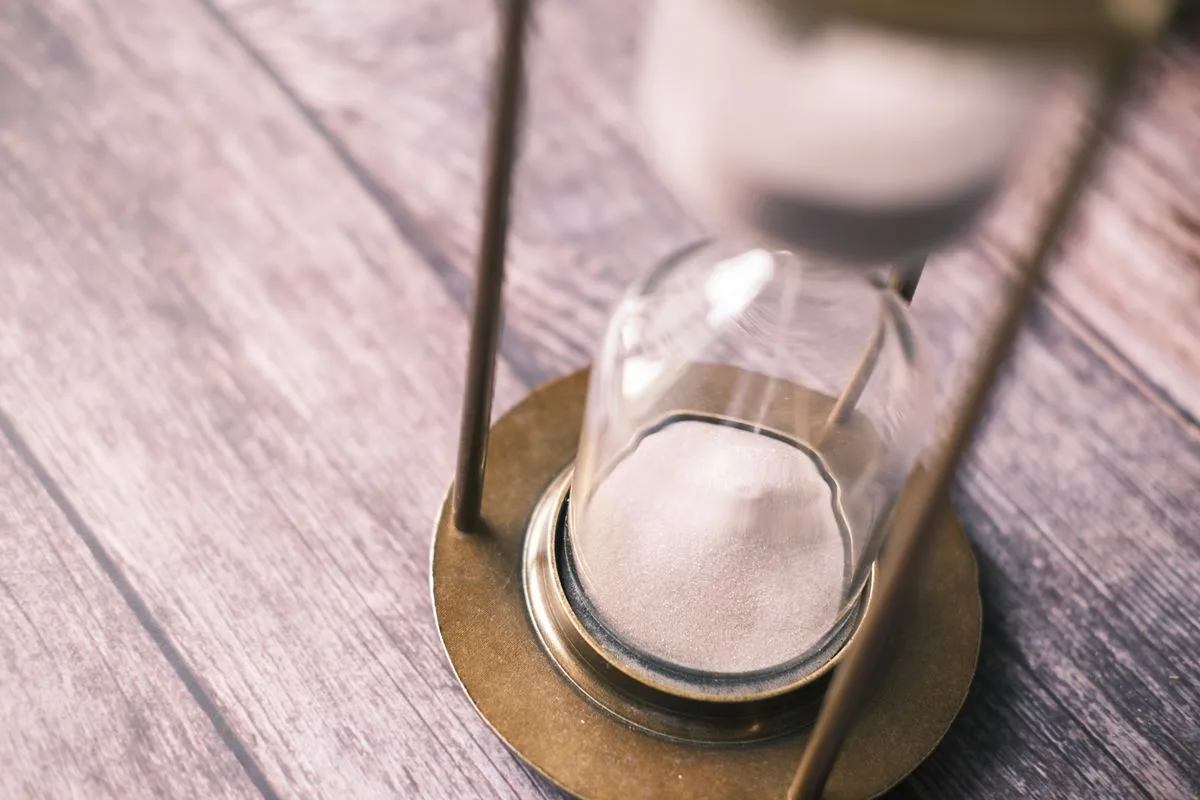
In the early 1950s, sleep researcher Nathaniel Kleitman — the same scientist who co-discovered REM sleep — noticed something strange. The 90-minute sleep cycles he'd been mapping didn't stop when people woke up. They kept going.
Kleitman called this the Basic Rest-Activity Cycle, or BRAC. A biological oscillation running continuously, 24 hours a day, alternating between states of higher neural activation and relative quiet. During sleep, we experience it as movement through REM and non-REM stages. During waking hours, it shows up as natural peaks and troughs in alertness, concentration, and cognitive performance.
His 1963 book Sleep and Wakefulness laid out the framework, but it took decades for researchers to connect the basic rest-activity cycle to daytime output. Peretz Lavie, a chronobiologist at the Technion in Israel, built on Kleitman's work through the 1980s and 1990s, mapping what he called "ultradian performance peaks" — windows of heightened cognitive capacity appearing roughly every 90 minutes during the day. His research, published in journals including Chronobiology International, showed that people working in sync with these windows demonstrated measurably better focus and task completion than those who worked against them.
The word ultradian means "more frequent than once a day." Circadian rhythms cycle once in 24 hours. Ultradian rhythms cycle multiple times — roughly 8 to 10 full cycles across a waking day.

You know the feeling. You've been working hard for an hour and a half. Then, without warning: a yawn. Your eyes lose their grip on the screen. Your leg starts bouncing. You shift in your chair, then shift again. Your mind drifts to lunch, to nothing in particular, to anything except the document in front of you.
Almost everyone reads this as a character flaw. Weak focus. Poor discipline. Not enough coffee.
It's none of those things. It's a physiological signal, as reliable as hunger, telling you that your 90-minute ultradian performance window has ended and your brain has entered the rest phase of its cycle.
During the active phase of the BRAC, the brain runs on relatively left-hemisphere-dominant, focused processing — ideal for analytical work, writing, problem-solving. As the cycle turns, there's a shift toward right-hemisphere activity: daydreaming, pattern recognition, diffuse processing. Research by Eran Zaidel at UCLA in the 1980s documented these hemispheric shifts in relation to ultradian cycles, and Ernest Rossi later synthesized them into a framework for what he called "ultradian healing responses" in his 2002 book The Psychobiology of Gene Expression.
Restlessness, yawning, loss of focus, physical tension, sudden hunger, a vague urge to stand up — these are the body's break signal. A biological request that, if you ignore it, carries consequences.

Here's what happens when you push through.
The rest phase of an ultradian cycle isn't optional, in the sense that your body will attempt to enter it regardless. When you override it — with caffeine, with willpower, with the ambient pressure of a deadline — you're not skipping the rest phase. You're forcing the system to run in deficit.
To maintain alertness past the natural trough, the body activates its stress response. Cortisol and adrenaline step in. Your HPA axis — the hypothalamic-pituitary-adrenal system — picks up the slack. You keep going. You feel fine.
But cortisol debt accumulates. Each forced override adds to the load. By the third or fourth ultradian cycle of the day, the system is running on stress hormones that were meant for emergencies, not sustained cognitive work. Research by Sonia Lupien at McGill University has shown that chronically elevated cortisol measurably impairs working memory, attention switching, and the prefrontal cortex functions you rely on most for complex thinking.
This is why by mid-afternoon, your performance degrades in a way that more coffee can't fix. You've been spending biological capital you didn't have. The 3 p.m. slump isn't a mystery of human weakness — it's the accumulated interest on a debt that started before lunch. Treating it as a brain energy management problem, rather than a motivation problem, changes how you respond.
Ultradian rhythms don't operate alone. They stack on top of your circadian rhythm in ways that can either compound your performance or compound your exhaustion.
Your circadian rhythm includes a well-documented dip in alertness in the early-to-mid afternoon — typically between 1 p.m. and 3 p.m. for most chronotypes. This isn't about lunch. It's a built-in biological trough, visible in core body temperature drops and melatonin fluctuations, documented extensively by researchers including William Dement at Stanford and Russell Foster at Oxford.
Consider the timing: if an ultradian rest phase coincides with the circadian afternoon trough, you get a double hit. Two systems simultaneously demanding recovery. The drowsiness becomes overwhelming. Most people respond by reaching for a third coffee, opening social media, or pushing harder — all of which either mask the signal or deepen the debt.
A nap at this intersection, on the other hand, is extraordinarily efficient. A 10-to-20 minute sleep during the circadian trough, aligned with an ultradian rest phase, restores alertness more effectively than caffeine. Research by Sara Mednick at UC San Diego, published in a 2006 Nature Neuroscience study, demonstrated that targeted napping during the circadian dip preserved learning capacity across the day in ways that staying awake — regardless of stimulants — could not.
Timing isn't a productivity hack. It's physiology.

Knowing the science is one thing. Using it is another.
The basic structure behind any serious ultradian rhythm productivity approach: work in genuine 90-minute blocks, then take a real 15-to-20 minute recovery break, then repeat. Three to four cycles makes a productive full day for most people. Simple enough to sound underwhelming. Difficult enough that almost nobody does it correctly.
The failure point is the break.
Most people's version of a break means switching from the hard task to an easy one. Checking email. Scrolling through a phone. Watching a short video. This is not recovery. It's the same neural demand with a different interface — the prefrontal cortex doesn't get to rest because the input stream hasn't stopped.
A real ultradian break looks like stepping away from screens, going outside or to a window, taking a slow walk, sitting quietly with eyes closed for ten minutes, doing light stretching or breathwork. The goal is to let the brain do nothing goal-directed. Diffuse processing. Mind-wandering. The neural default mode network, which activates during unfocused rest, is not idle — it's consolidating, connecting, preparing for the next active phase.
In his clinical work, Rossi documented patients who practiced brief 20-minute rest periods timed to natural cycles — reporting not just better focus but reduced chronic tension and improved mood across weeks. The mechanism isn't mystical: you're letting the system complete its cycle instead of perpetually interrupting it.
The practical version for a regular workday: start your first block when you sit down and feel alert. Don't set a 90-minute timer immediately — notice when the first signals appear (yawning, mental drift, physical restlessness). That's your natural window end. Take a genuine break. When you feel a quiet return of interest and readiness, that's the start of the next cycle. Let the body lead for the first few days, until you have a sense of your personal rhythm.
You don't need a new system. You need one piece of information: when is your next natural focus window?
Sit down to work within the next two hours. Leave your phone face-down. Don't open anything you're not actively working on. Work until you notice the signals — the yawn, the restlessness, the cognitive softening. Note the time. Do it once more later in the day. By end of day, you'll have a rough map of your own ultradian rhythm.
Most people discover they have two or three genuinely sharp windows and several more they've been grinding through on stress hormones. The goal isn't to work less — it's to work when your biology is with you, and recover when it's asking for it.
Kleitman mapped this rhythm over sixty years ago. The research has been there. The only thing missing was the decision to take the break.
If your energy and focus feel unpredictable, the most useful next step isn't another productivity app — it's tracking your next three ultradian cycles and seeing what your body already knows. Start today.
You don’t have to take my word for it — check it in practice. Get my author’s checklist “5 non-obvious signs that your biorhythms are off” and start the path to recovery today.
Get a checklist and make an appointment